A team can work quickly and still spend too much of its week recovering from preventable problems.
The brief changes after production starts. Feedback arrives in separate conversations. A new priority enters the schedule without anything moving out. People keep delivering, but each deadline requires another round of improvisation.
The opportunity is to make delivery more reliable from the start.
A thoughtful, methodical approach should help people move with confidence. It should make the work easier to start, the decisions easier to make and the commitments easier to keep.
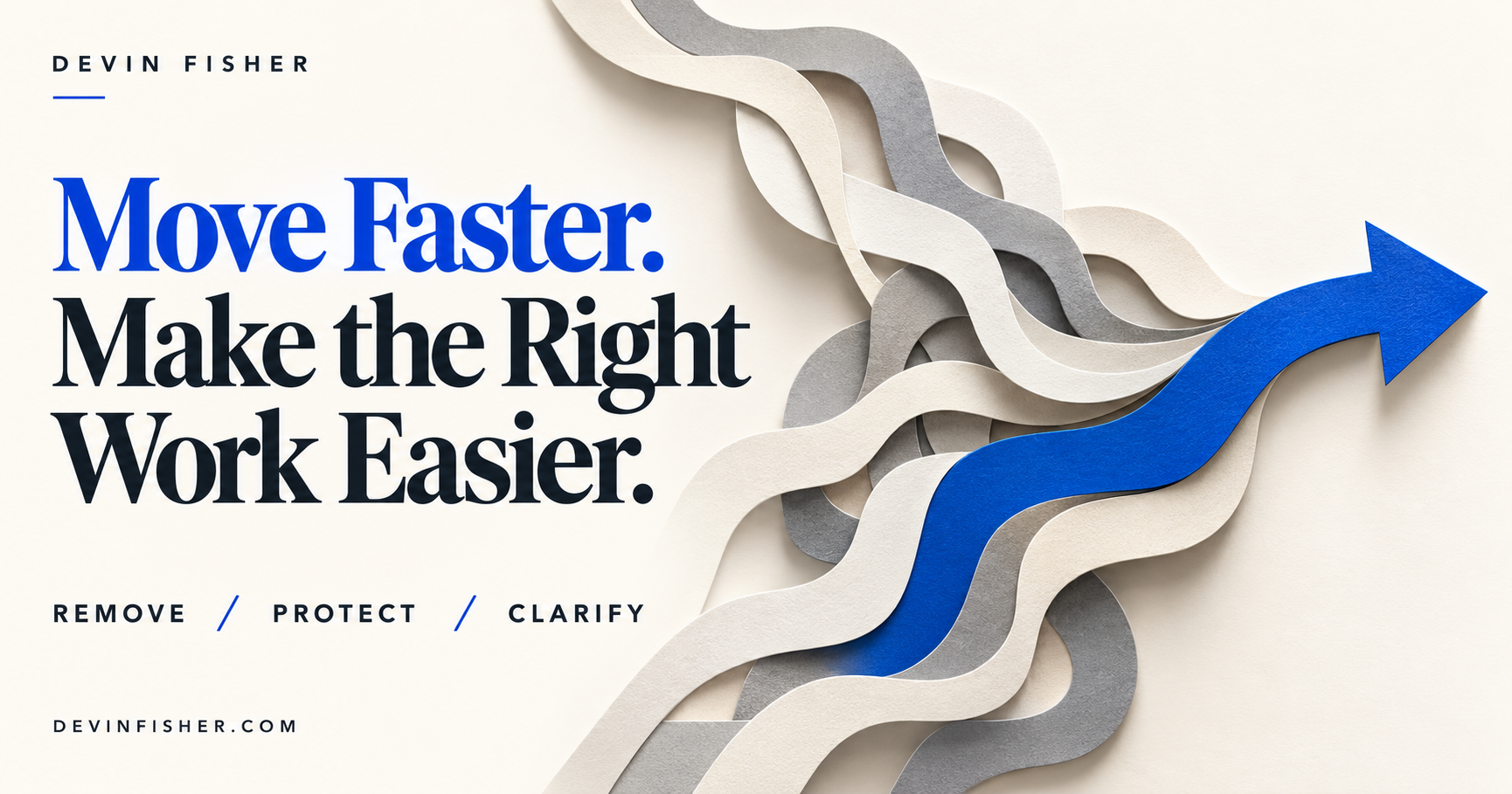
For me, that comes down to three actions: remove, protect and clarify.
Remove what makes good work harder
Start with the effort that adds little to the result: duplicate status updates, missing information, unnecessary handoffs and reviews that repeat decisions already made.
Before adding a tool or changing a workflow, ask the people doing the work where they lose time. Then trace the cause.
A project that appears understaffed may be waiting for direction. An overloaded specialist may be receiving work that someone else could handle with a clear standard. A recurring rush request may reveal a gap in planning.
Each situation needs a different response.
Across a business supporting multiple brands or teams, consistent intake and reporting can make demand visible. That doesn't require identical creative approaches. It gives leaders a common view of what is being requested, what it requires and what is already committed.
Automation and AI can help with repetitive tasks. Their value should show up in less administrative effort and more dependable delivery. A faster handoff is useful when the next person receives what they need to act.
Protect the creative work
Protecting creative work means making room for the decisions that give it direction.
My production background shapes this perspective. Creativity can emerge through people working together: an observation, an adjustment or an unexpected possibility that improves the idea. A good operating approach gives that contribution a place while keeping the team accountable to the assignment.
That requires boundaries. Exploration needs a clear purpose, appropriate time and a decision owner. Routine adaptations shouldn't inherit the review burden of a major campaign. More consequential work needs the right expertise involved before costly commitments are made.
Adobe's qualitative research on creative friction explores the relationship between personal choices, effort and ownership in AI-assisted work. It offers a useful question for leaders: which parts of the process help people contribute meaningfully? It doesn't establish that taking longer produces better work.
In practice, protecting quality also means protecting focused time and sustainable workloads. A schedule filled to its limit leaves little room for the revisions and exceptions the team actually encounters. Capacity plans should account for those demands instead of treating them as surprises every week.
The purpose of a clear process is to help people make good decisions and keep the work moving.
Clarify the choices before they become rework
People need to know what success looks like, who decides and what happens when priorities change.
Consider a hypothetical team managing a launch campaign alongside ongoing content requests. A new assignment arrives with an urgent deadline.
The useful response is to make the available choices visible. Can another commitment move? Can the scope change? Does the work require an external specialist? What will that support cost, including internal briefing and review?
Bringing in a partner adds capacity only when the team can support the handoff. A clear scope, usable inputs and an agreed review process belong in the plan alongside the fee and delivery date.
Financial discipline and creative quality connect here. Earlier decisions about scope, resources and approval help the business understand what it is funding. They also give creative teams a more stable assignment.
AI makes this clarity especially valuable. A polished visual can help people understand a direction, but it can also make an unfinished concept appear ready for production. Teams need to distinguish what has been explored from what has been approved.
In hybrid work, that may mean planning how photographed and generated elements will come together before a shoot. Some effort moves earlier. The operating plan should reflect that shift so the promised saving includes the preparation and integration required.
Turn the framework into a working habit
Apply remove, protect and clarify to one recurring workflow with the people responsible for delivering it.
- Remove: Choose an avoidable delay or repeated task to eliminate.
- Protect: Protect the creative work and the thinking that makes it better.
- Clarify: Make priorities, ownership and decisions clear so people can move forward.
Give the change an owner and review what happens. Look at delivery predictability, revision effort, budget variance and workload alongside the creative result. A shorter task is helpful; a smoother path to accepted work is more meaningful.
Keep the process proportionate. Simple, repeatable assignments should move easily. Complex or consequential work needs deliberate decisions at the points where they matter.
The goal is a team that can do strong work at a sustainable pace, with fewer preventable disruptions and greater confidence in what it can deliver.
Remove what gets in the way. Protect the creative work. Clarify what lets people move.
A Field Note by Devin Fisher.
All Field Notes